New international project targets corruption risks in carbon markets
Carbon markets are meant to help finance forest protection and climate action. Yet too often they are undermined by weak governance, corruption risks and a lack of transparency.
Concerns over the credibility of some carbon credits erode trust in a system designed to channel climate finance and support forest-dependent communities.
A new international project aims to address these challenges head-on by strengthening governance and anti-corruption safeguards across forest carbon markets. The Basel Institute on Governance is pleased to join this effort as a project partner, contributing its expertise through the Green Corruption programme.
A collaborative effort for better carbon market governance
The project, Towards Inclusive Governance for Forest Carbon Markets, is led by Transparency International and funded by the UK Government through the UK Foreign, Commonwealth & Development Office (FCDO) Forest Governance, Markets and Climate programme.
Running until March 2028, the initiative brings together a consortium including the Basel Institute on Governance, Resource Extraction Monitoring and local Transparency International chapters in focus countries. Together, the partners will work to reduce corruption risks in forest carbon markets and strengthen the integrity of carbon credit systems.
The project will focus on three key countries – Indonesia, Ghana and Cameroon – supporting governments, civil society organisations, certifiers, private sector actors and forest-dependent communities to better identify and mitigate corruption risks linked to carbon credit projects.
Carbon markets are inherently transnational: credits may be generated in one country, verified in another and purchased in a third. This complexity creates opportunities for corruption networks to exploit regulatory gaps, conflicts of interest and weak oversight mechanisms. The project aims to close those gaps by combining evidence generation, national advocacy and international engagement.
Bringing anti-corruption expertise to forest carbon markets
The Basel Institute will play a central role through our Green Corruption programme, which focuses on tackling corruption linked to environmental crimes and natural resource governance.
Our team is leading the project’s first major output: consolidating available data, gathering evidence to identify typologies of corruption risks in forest carbon markets and developing global, gender-sensitive guidelines to help prevent them.
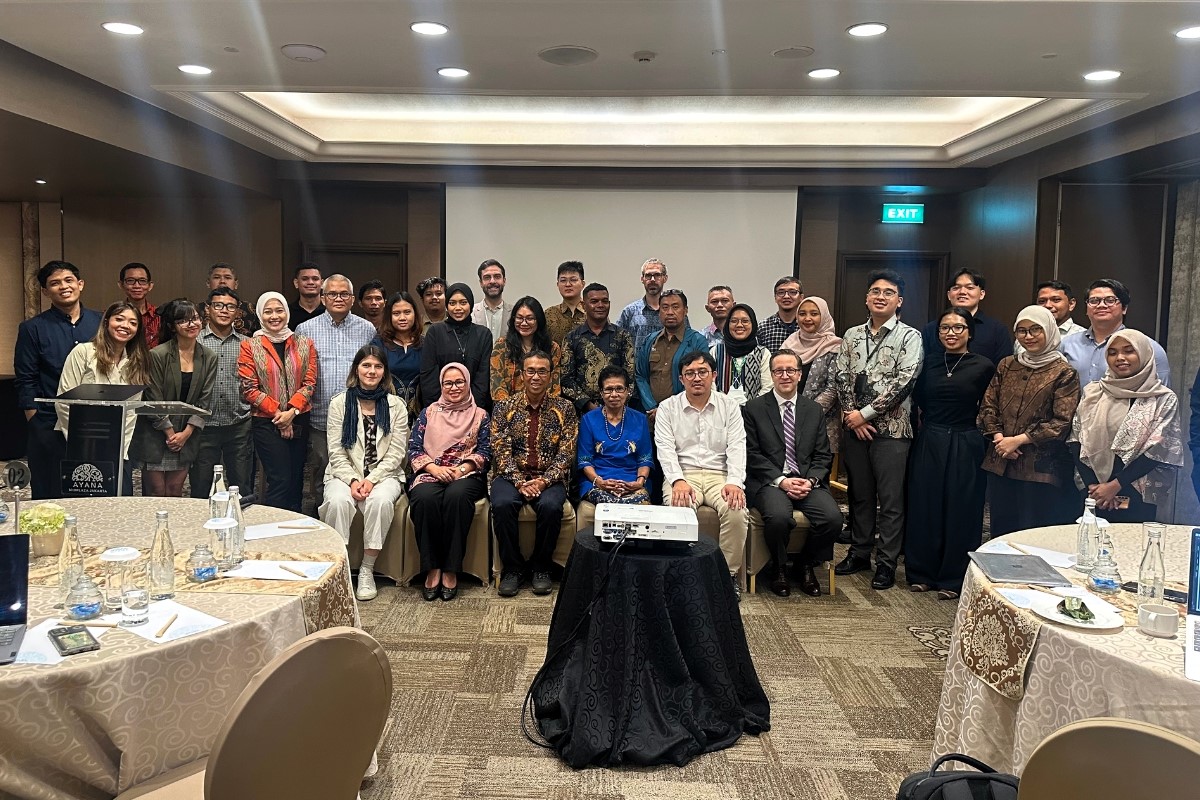
- Working closely with partners and national stakeholders, we are leading the organisation of corruption risk identification workshops in Indonesia and Ghana. These workshops will bring together key actors across the carbon market ecosystem to map corruption vulnerabilities in carbon markets systems and identify practical actions to mitigate these risks. The findings will feed into country-specific risk assessments.
- In parallel, our team is conducting an assessment of global carbon markets governance dynamics and vulnerabilities to corruption.
- Ultimately national and international assessments will inform the development of global guidelines, which will be designed to strengthen anti-corruption safeguards across carbon markets.
- These global guidelines will then support advocacy and reform efforts led by Transparency International and its national chapters.
- We will also contribute to global advocacy efforts by advising international certification bodies and other actors on improving safeguards and governance standards in carbon markets.
Dr Amanda Cabrejo le Roux, Deputy Director of the Basel Institute’s Green Corruption programme, said:
“Carbon markets hold real promise for forests, communities, and the climate — but promise alone isn't protection. Like any system that moves money at scale, they are vulnerable to those who would bend the rules for personal gain. The first step is a rigorous analysis of corruption risks: mapping scenarios and building clear typologies, through sector-wide workshops and consultations with all key stakeholders. From there, those same actors can work together to develop practical mitigation measures — building a system that is genuinely resilient. That is exactly what this project sets out to do."
Part of a wider “green” governance agenda
The project aligns with the Basel Institute’s Green Corruption strategy, which increasingly focuses on corruption and governance challenges linked to climate change and the global energy transition.
Forest carbon markets involve complex financial flows, transnational actors and high-stakes environmental outcomes, making strong governance and anti-corruption safeguards essential.
With years of experience analysing corruption risks in environmental and natural resource sectors and beyond, the Basel Institute is well placed to contribute to this work.
By contributing our expertise to the project, we aim to help ensure that carbon markets deliver on their promise: protecting forests, supporting communities and advancing credible climate action.
Learn more
- View the full project overview on the Transparency International website.
- Interested in corruption and governance in the environmental space? Join the Countering Environmental Corruption Practitioners Forum, a global community of practitioners jointly led by the Basel Institute on Governance, Transparency International, WWF and TRAFFIC.